
Description
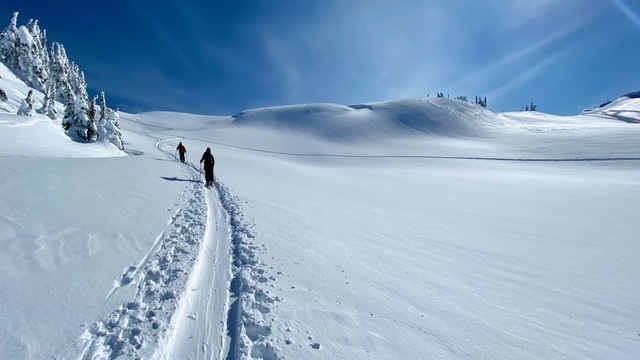
The Route: Plan is to start at the Whistler Olympic Park XC ski area, ski up the Hanging Lake trail to Hanging Lake, and then on up to the top of Gin Peak. Descent will be either by the same route or possibly down the north face if snow conditions are suitable.
Difficulty rating: Intermediate/advanced depending on snow conditions – most of this trip is on moderate slopes, but the ski down through the forest at the end of the day can be quite difficult as it often becomes like an icy luge track.
Distance: ~12km round trip
Elevation gain: ~1000m
Requirements: AST1, shovel, probe, avalanche transceiver, ski helmet, the 10 essentials, enough food, liquids, and warm clothing for a full day out.
Access: Parking at the trailhead in the XC ski area requires purchasing a backcountry access ticket (one per car) which we purchase at the entry gate. The gate is open is 8:30 am – 4:30 pm so we have to make sure to be back by about 4:00 pm to avoid getting locked in!
Carpooling: 4×4 is not required, the road is good all the way to the parking lot. I can drive and take up to 3 other people. We can car pool from St. David’s church in West Van for people in the Vancouver area.
Please answer the following questions in the “Message to Trip Organizer” box when you sign up:
- Do you ski or splitboard?
- How much ski touring experience do you have?
- AST1? AST2?
- Have you been out ski touring recently? Where to?
- Can you drive and how many passengers can you take?
Please only sign up if you are committed to going on this day. And if you cannot come please remember to cancel your registration on the website so someone else can go.
Risks and Hazards to be aware of for this trip:
General Hazards:
Slips trips and falls indoor or outdoor. Equipment failure. Infectious disease contracted through viruses, bacteria, parasites, and fungi which may be transmitted through direct or indirect contact. Negligence of other persons, including other guests. Negligent first aid. Negligence of the trip organizer, including failure to take reasonable steps to safeguard or protect you from, or warn you of risk, dangers, hazards, on participating in ACC activities.
Terrain:
Cornices and crevasses. Trees, tree wells, and tree stumps. Cliffs, creeks, rocks and boulders. Holes and depressions below the snow surface. Variable and difficult snow conditions. Snowcat roads and road banks. Fences and other man-made structures. Impact or collision with other persons, vehicles or objects. Encounters with domestic or wild animals. Loss of balance or control. Becoming lost or separated from the group. Slips, trips, and falls.
Avalanche:
Avalanches can occur in the terrain you will be entering. Caused by natural forces, or by people travelling through the terrain (skiing/snowboarding). Anyone caught in an avalanche is at risk of personal injury, death, and/or property damage or loss.
Communication and Rescue:
Communication can be difficult and in the event of an accident, rescue and treatment may not be available. Adverse weather may also delay the arrival of treatment and transport out of the field. If an injury occurs in challenging terrain movement to an evacuation point may be slow.
Boots and Binding Systems:
Even when set up correctly, a ski binding might not release during every fall or may release unexpectedly. The ski boot/binding system is no guarantee that the skier will not be injured. Non-DIN-certified bindings, such as pin/tech bindings, present a higher risk of pre-release and/or injury as they are not designed to the same safety standards as a DIN-certified alpine binding.
Unlike alpine ski boot/binding systems, snowboard and some telemark boot/binding systems are not designed or intended to release and will not release under normal circumstances. Using such a system increases the risk of injury and/or death when caught in an avalanche.
Guest sign-up
Sign-ups are no longer available for this event.