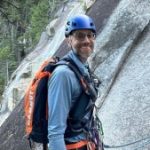
Description
If you’ve been lead sport climbing and have done a couple of multi-pitch routes, and you’re keen to squeeze in some more climbing this Fall, this could be your next Vancouver Section ACC event. The plan is to meet up at a mutually convenient location and carpool from there to Cheakamus Canyon area to climb Frontside 180. It’s a 200m long easy-to-moderate multi-pitch climb, with 10 pitches, but many of them can be linked together with a 70m rope to save time.
If we get to the base of the climb and it’s too crowded, ‘How Did I Get There?’ (5.9) is very close by and could be an option or Ursa Minor. Frontside 180 itself is moderate (5.7/5.8, well protected). I’m screening for confident 5.9 sport climbers as a margin of safety and because the backup route sits at 5.9. Being solid at that grade means you’ll have some gas in the tank either way, not climbing at your limit.
The planned descent is a walk-off, not a rappel, and there are also walk-off bail options partway up the route. That said, I want everyone comfortable rappelling as a contingency skill.
This event is best suited to members who have climbed outdoors for a season or two and are confident leading or following 5.9 (sport) and know how to rappel.
Though I have gear that we could use I think it would be best if we list all the gear each one has so we can share.
This activity is weather dependent. The wall stays shaded until early afternoon, so expect a cooler, possibly damp start regardless of departure time. We’ll make a final call the morning of based on conditions.
Gear list:
- Helmet
- Rock climbing harness with two tie-in points
- Belay device with guide mode
- Belay carabiner
- Rock shoes
- Head-lamp
- Personal Anchor
- 2 x Prusiks
- Locking carabiners x2 spare
- Sun screen, snacks/lunch and water for the multi-pitch day, a warm layer for belay stances
- Anchors x 2 (120cm sling, 2 D-shaped locking carabiners, master point locking carabiner), quick draws x 10, 70m rope.
If you have gear questions please ask.
I would appreciate sign-ups keeping their availability up to date as it really helps plan the event.
In the question box below could you describe in 50-100 words or less your climbing experience and some routes you have climbed?
Activity Hazards – MUST READ BEFORE REGISTERING
Participating in this activity involves many risks, dangers and hazards that could result in injury, death, paralysis, property damage, or loss to me or other third parties. These risks, dangers, and hazards may include, but are not limited to those listed below. Please review them carefully before registering.
- Terrain is uncontrolled, unmarked and not inspected, and may include: Cliffs; trees, forest deadfall, and tree stumps; rocks and boulders; variable and difficult walking terrain; impact or collision with other persons vehicles or objects; extreme variation in trails or terrain; encounters with domestic or wild animals; loss of balance or control; slips, trips and falls; becoming lost or separated from one’s group.
- Rockfall: Rockfall can be caused by natural forces, or by people travelling through the terrain (e.g. climbing/scrambling/hiking).
- Falls and Belaying: Rock climbing presents the risk of falling from the wall causing the climber to collide with the wall or ground, which can lead to injury or death. The risk of belay failure is also present which can contribute to the risk of a ground fall. Equipment failure, including equipment associated with climbing, rappelling and belaying.
- Communication, rescue and medical treatment: Communication can be difficult and in the event of an accident rescue and treatment may not be available. Adverse weather may also delay the arrival of treatment and transport out of the field. If an injury occurs in challenging terrain, movement to an evacuation point may be slow.
- Personal injury includes: sprains; strains; shock; stress; cuts; abrasions; fractured or broken bones; impalement; loss of limbs; sunstroke; sunburn; dehydration; illness; soft tissue injuries; neck, head and brain injury; paralysis; psychological injury; other injury to the body.
- Other: changing weather conditions including but not limited to high winds, rain, lightning, forest fires; equipment failure; incomplete warnings or instructions; negligent first aid; negligence of other people, including trip coordinator and other guests
Guest sign-up
Only members can sign up to this event. If you are already a member, please log in first.