
Description
Mar. 25 update – Moved to Saturday, April 18 as the next possible tentative date.
Mar. 4 update – postponed due to poor weather forecast. Will try to reschedule sometime in Apr.
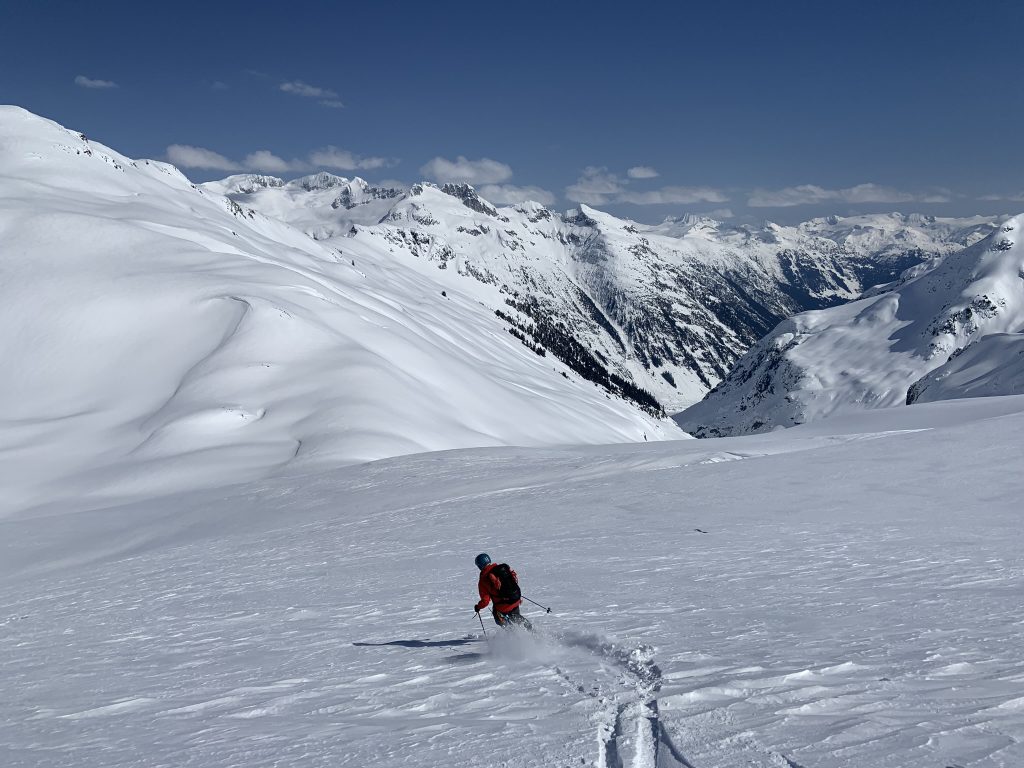
The Route and Trip: This is a one-day crossing of the beautiful and popular Nch’ḵay̓ (Garibaldi) Neve ski traverse . Plan is to do at least one group going South to North and another in reverse to minimize car shuttling hassle. Skiing with a day pack is also much nicer than with an overnight one. If the group is interested, has the skill and is fast enough, a summit of Garibaldi is possible if conditions allow. Each group will have a maximum of 4 participants to keep things efficient. The date is tentative because we need solid weather and a reasonable snowpack to do the trip – so we may push it a day or to a completely different weekend if necessary.
Difficulty rating: While technically an easy/intermediate tour in terms of terrain, we rate it as advanced because the distance to cover is over 40 km and the elevation gain is between 1700 and 2000 m depending on direction. The skiing down the down Ring Ck and the switchbacks (South to North) may be challenging if icy. Most people take anything from 8 to 13h to complete the trip. You and your equipment need to be prepared for that. There’s also some crevasses but usually are not a problem mid winter.
Distance: ~45 km one-way trip
Elevation gain: ~1700-2000 m
Requirements: you need to be a good team member – this means the ability to communicate with your team with clarity and empathy to make good decisions together. We also want to stress the required endurance (not necessarily speed!) and having done some recent long days on snow – you need to be confident in your own fitness, stamina, boot fit, and equipment reliability. There will be some additional group gear to be shared and discussed at the pre-trip meeting. We will emphasize on packing light, but with enough warm layers and calories. Basic glacier travel kit and avalanche gear is needed. Avalanche (AST1 or similar experience) and crevasse rescue awareness are necessary, feel free to reach out with any questions.
Carpooling: we’ll take a few cars (ideally one per group), swap keys in town and start at either end to avoid shuttling. Start will be around 5AM to maximize daylight.
Participant screening questions: please fill out this form if you’re interested in joining.
Risks and Hazards to be aware of for this trip:
General Hazards:
Slips trips and falls indoor or outdoor. Equipment failure. Infectious disease contracted through viruses, bacteria, parasites, and fungi which may be transmitted through direct or indirect contact. Negligence of other persons, including other guests. Negligent first aid. Negligence of the trip organizer, including failure to take reasonable steps to safeguard or protect you from, or warn you of risk, dangers, hazards, on participating in ACC activities.
Terrain:
Cornices and crevasses. Trees, tree wells, and tree stumps. Cliffs, creeks, rocks and boulders. Holes and depressions below the snow surface. Variable and difficult snow conditions. Snowcat roads and road banks. Fences and other man-made structures. Impact or collision with other persons, vehicles or objects. Encounters with domestic or wild animals. Loss of balance or control. Becoming lost or separated from the group. Slips, trips, and falls.
Avalanche:
Avalanches can occur in the terrain you will be entering. Caused by natural forces, or by people travelling through the terrain (skiing/snowboarding). Anyone caught in an avalanche is at risk of personal injury, death, and/or property damage or loss.
Communication and Rescue:
Communication can be difficult and in the event of an accident, rescue and treatment may not be available. Adverse weather may also delay the arrival of treatment and transport out of the field. If an injury occurs in challenging terrain movement to an evacuation point may be slow.
Boots and Binding Systems:
Even when set up correctly, a ski binding might not release during every fall or may release unexpectedly. The ski boot/binding system is no guarantee that the skier will not be injured. Non-DIN-certified bindings, such as pin/tech bindings, present a higher risk of pre-release and/or injury as they are not designed to the same safety standards as a DIN-certified alpine binding.
Unlike alpine ski boot/binding systems, snowboard and some telemark boot/binding systems are not designed or intended to release and will not release under normal circumstances. Using such a system increases the risk of injury and/or death when caught in an avalanche.
Guest sign-up
Sign-ups are no longer available for this event.